Eating out didn’t suddenly stop. Restaurants didn’t disappear. Social meals didn’t end.
But for many people, ordering at restaurants began to feel different.
What once felt automatic, opening a menu, reviewing options, choosing a dish, now requires more thought. Menus feel longer. Descriptions feel heavier. Decisions feel more public. And the moment of ordering, which used to pass unnoticed, can suddenly feel like the hardest part of the experience.
This shift isn’t about discipline or restriction. It’s about preferences changing, and restaurant menus not changing with them.
Understanding how GLP-1 preferences reshape ordering behavior helps explain why dining out can feel harder, why hesitation shows up at the table, and why clarity has become more valuable than choice.
Eating Out Didn’t Stop, Ordering Changed
Most people don’t stop going to restaurants. They still meet friends for dinner, celebrate birthdays, travel, and order takeout. What changes is how decisions are made once the menu appears.
Before, menus were a source of excitement or curiosity. Now, they can feel like a wall of options that all require interpretation. The shift happens quietly. People take longer to read. They reread descriptions. They pause before ordering, often scanning for protein-forward, lower-carb, or WW-aligned options that feel predictable.
It’s not that restaurants became less appealing. It’s that ordering now carries more cognitive weight.
Dining is still social and enjoyable, but only if the decision itself doesn’t become a source of stress.
Why Restaurant Menus Feel Harder Than Before
Restaurant menus were never designed to support evolving preferences. They’re built to showcase variety, creativity, and abundance. For someone whose preferences have become more specific, this abundance can feel overwhelming.
Menus often include:
- Long, descriptive language
- Multiple preparation styles
- Unclear portion expectations
- Add-ons, substitutions, and variations
Each element requires interpretation. At home, interpretation is manageable. At a restaurant, where decisions are public and time-pressured, it becomes friction.
The difficulty isn’t about lack of options.
It’s about lack of clarity.
That’s why menus that once felt fun can suddenly feel exhausting.
Preference Shifts That Influence Ordering Decisions
As preferences change, ordering behavior adapts, even if people don’t consciously notice it happening.
Instead of browsing menus casually, many people begin scanning with intent. They’re no longer looking for novelty. They’re looking for alignment.
Common shifts include:
- Wanting options that feel predictable
- Avoiding dishes that require guessing
- Favoring simplicity over complexity
- Losing interest in random or overly indulgent choices
- Gaining interest in high-protein, lower-carb, or WW-aligned selections
These shifts don’t come with a rulebook. They show hesitation, slower decisions, or repeatedly choosing similar types of meals – not because they’re ideal, but because they’re easier to evaluate quickly.
The menu hasn’t changed.
The way people approach it has.
From Browsing Menus to Scanning for Clarity
There’s a subtle but important transition that happens in ordering behavior.
Before, menus were browsed. People explored sections, compared options, and debated between appealing dishes.
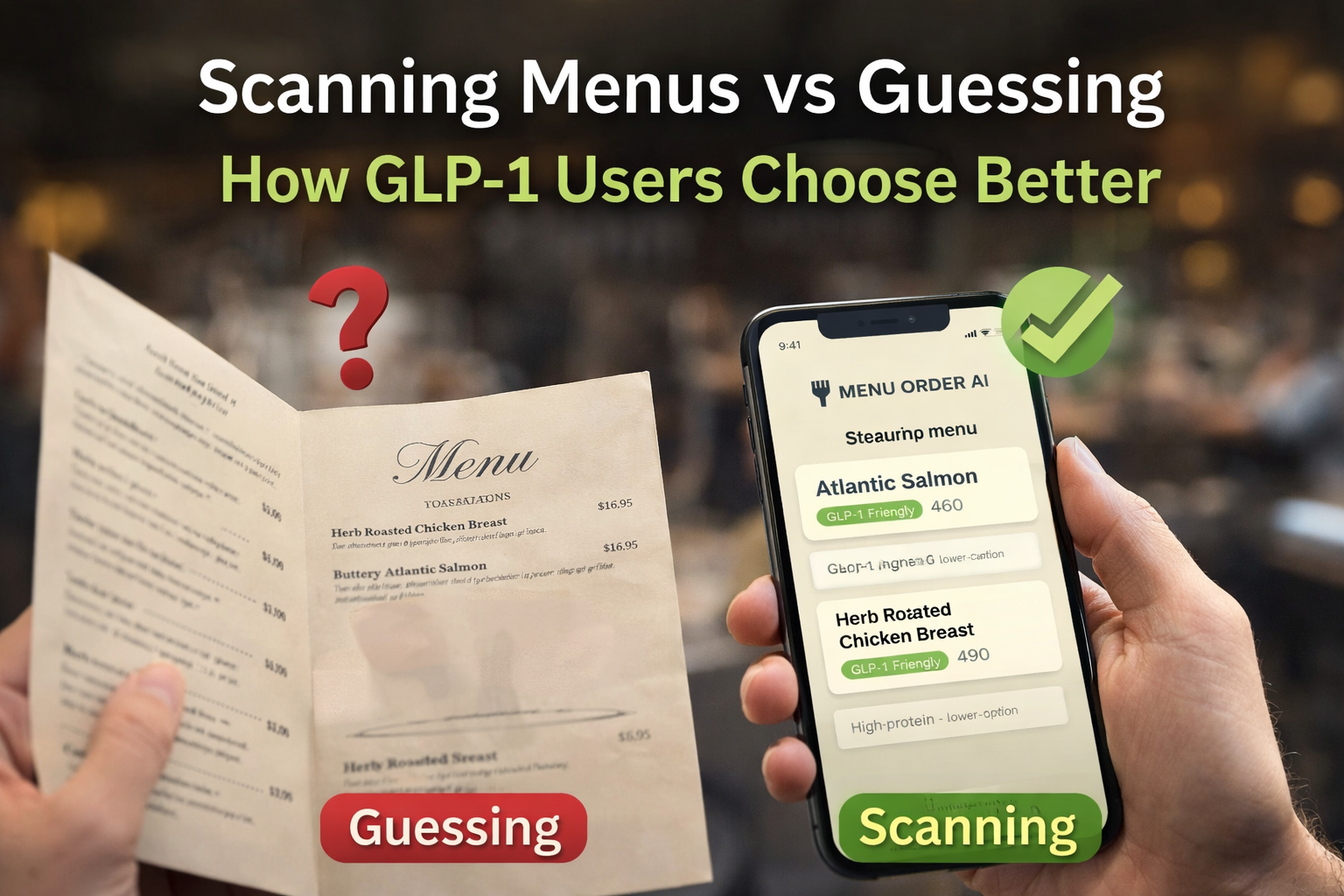
Now, menus are scanned. The goal isn’t inspiration, it’s reassurance.
The internal question becomes:
“What here feels like a smart, protein-forward, lower-carb choice I won’t regret?”
This scanning behavior is efficient but mentally demanding. People filter information quickly, under pressure, without explicit guidance. The process is invisible to others at the table, but internally it can feel intense.
When clarity isn’t found quickly, frustration builds.
Decision Fatigue at the Table
Ordering isn’t a private moment. It happens with friends watching, servers waiting, and conversations pausing. That social context amplifies decision fatigue.
When preferences have changed, people may:
- Feel rushed to decide
- Worry about choosing “wrong”
- Hesitate to ask questions
- Second-guess their choice after ordering
Often, this fatigue comes from mentally calculating whether something feels protein-forward enough, too carb-heavy, or unnecessarily complicated, again and again, across different menus.
Over time, this can cause people to disengage from dining experiences, not because they don’t enjoy them, but because the decision process feels draining.
Why Guesswork Becomes the Default
When clarity is missing, guesswork fills the gap.
People may:
- Order something familiar regardless of interest
- Choose quickly just to end the decision
- Avoid unfamiliar restaurants
- Stick to the same places repeatedly
These behaviors aren’t signs of rigidity. They’re coping mechanisms.
Guesswork reduces immediate stress, but it limits enjoyment. Dining becomes predictable by necessity, not choice.
The core issue isn’t the menu itself.
It’s the mental load required to navigate it.
Where Real-Time Menu Clarity Fits In
As scanning replaces guessing, many people look for ways to reduce the mental load of dining out. Not more rules. Not more research. Just something that makes the menu easier to navigate at the moment.
This is where tools designed around real-time menu clarity begin to fit naturally into the experience.
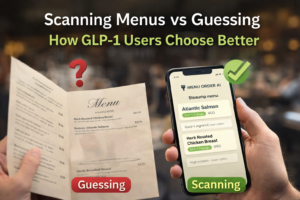
Solutions like Menu-Order AI app focus on the exact moment decisions are made. Instead of asking diners to decode long descriptions, the app surfaces menu options that already align with what many people scan for, high-protein, lower-carb, and WW-aligned choices, directly from existing menus.
The value isn’t instruction.
It’s a relief.
The menu doesn’t need to be rewritten.
The decision just needs to feel easier.
Why Ordering Confidence Matters Socially
Dining is about more than food. It’s about connection.
When ordering feels stressful, people withdraw, mentally if not physically. They rush decisions just to get back to the table.
When ordering feels confident, the opposite happens. People stay present. They enjoy the moment. The menu fades into the background where it belongs.
Confidence doesn’t require perfect choices.
It requires clarity and ease.
The Future of Dining Behavior
Dining culture is changing, but not in the way many assume. People aren’t abandoning restaurants. They’re adapting how they make decisions.
As preferences continue to evolve, clarity around protein-first, lower-carb, and WW-aligned choices will matter more than ever. Menus may not change quickly, but expectations will.
This is exactly where Menu-Order AI fits into the future of dining, helping people quickly identify the options they already look for, without stress or guesswork.
The future of dining isn’t about fewer options.
It’s about making the right ones easier to find.Eating out didn’t end.
It evolved.